For Japan Entry, Test with Pop-Ups Before Scaling Retail
Smaller experiments can reveal pricing, packaging and buyer expectations
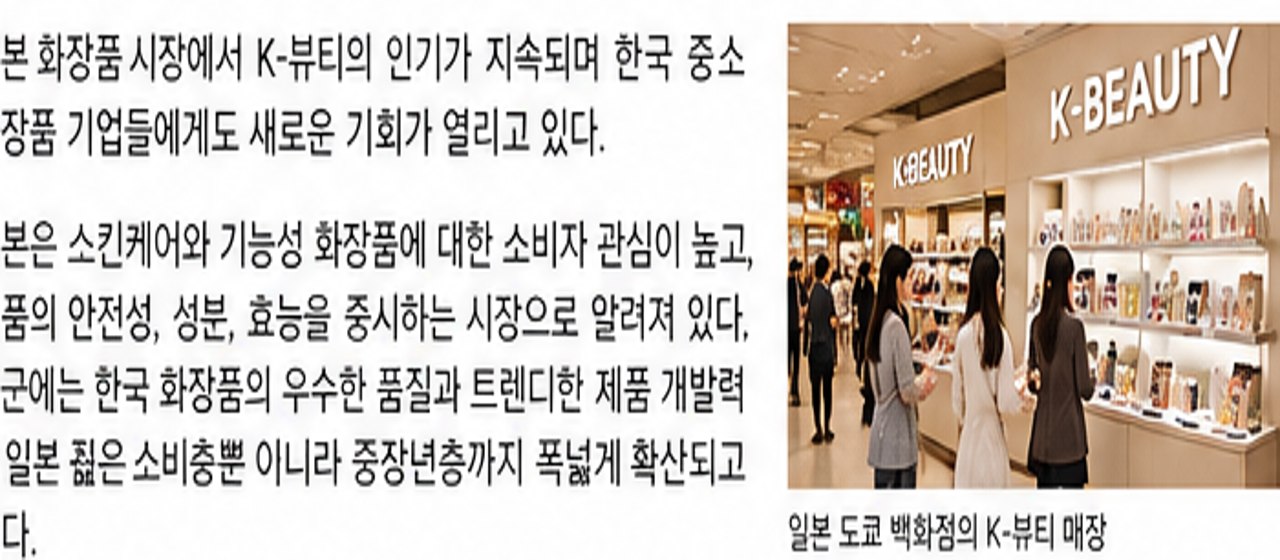
AI 제작 자료 이미지 · 실제 일본 매장 또는 실제 상품 사진이 아닙니다.
Validate before scaling
Securing major retail placement is an attractive goal, but growing before local price and communication tests can increase inventory and returns risk.
What brands have tried
MUSINSA reported more than 82,000 visitors to its 24-day Tokyo pop-up in 2025. Its scale is not a benchmark for every SME; the more useful lesson is linking product experience to online conversion and buyer relationships.
Measure more than sales
Observe questions, price resistance, product-size preferences and confusion about instructions. Record buyer inquiries and follow up with localized product sheets.
Compliance and costs still apply
Food and cosmetics regulations remain relevant to temporary retail. Rent, logistics, staffing, interpretation and unsold stock must be built into the test budget.
What a small test must measure
Record who stops at the display, whether a buyer hesitates after hearing the price, which explanations cause confusion and which pack sizes sell. Set hypotheses and test conditions before the event, ideally with a local sales partner. The objective is not only units sold but evidence for changing the next offer.
Budget for compliance and follow-up
A pop-up in a department store or mall does not exempt food from import and labelling requirements or cosmetics from Japanese sales and advertising obligations. Include rent, staffing, interpretation, logistics, commissions and remaining stock in the cost model. After the event, send product specifications and price lists to buyer leads and design a second test based on actual feedback.